| Publication Year | 2011 |
| Publisher | Nordic Council of Ministers |
| Report Homepage | http://www.norden.org/en/publications/publications/2011-528 |
| Publication Identifier | TemaNord 2011:528 |
| ISBN | 978-92-893-2221-8 |
Author: nordicscreening
-
Brominated Flame Retardants (BFR) in the Nordic Environment
-
Plasticizers and sweeteners in the Nordic countries
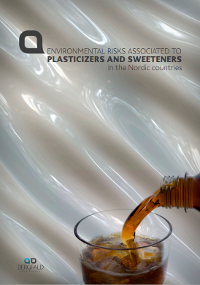
Publication Year 2010 Publisher Bergfald Miljørådgivere Files available for download
Information
Plasticizers and sweeteners are extensively used and the risk they represent as environmental pollutants needs to be assessed. certain plasticizers and sweeteners have been listed on the nordic council’s chemical priority list and are documented in this report as regards to the present knowledge available on their tonnage, physical/chemical properties, toxicity and environmental monitoring results. the aim is to make available a background that will allow the identification of those of greatest concern.
-
Nordic seminar on environmental screening
11 – 12 October 2010
Information
The aim of the seminar was to:
- to present results and impacts of existing screening activities
- discuss available selection methods for substances
- discuss modeling as a tool for selection of substances
- discuss approaches to future collaborations in screening
- identify areas of particular interest in an extended European perspective
- how can we make the best use of screening results in chemicals risk assessment work – are we focusing on the right substances & matrices?
Location
Malmo, Sweden
Files available for download:
-
Workshop on Pharmaceuticals and Personal Care Products (PPCPs) in the Nordic Environment
5 – 6 November 2008
Information
The last few years more and more focus has been set on environmental effects of substances in pharmaceuticals and personal care products. There have been several Nordic monitoring surveys and scientific projects on PPCP. The working group on joint Nordic screening organised the workshop on PPCPs where people working in the field were brought together to have fruitful discussions and to strengthen the Nordic co-operation.
The purpose of the workshop was to:
- Present results from different Nordic projects on PPCPs.
- Present and discuss risk assessment of PPCPs.
- Present and discuss the knowledge and challenges in environmental monitoring and analyses of PPCPs.
- Discuss knowledge and knowledge gaps with PPCPs and environmental effects. What should be prioritised in the Nordic countries.
Location
Norwegian Pollution Control Authority, Stromsveien 96, Oslo, Norway
Files available for download:
-
Screening of phenolic substances in the Nordic environments
Publication Year 2008 Publisher Nordic Council of Ministers Report Homepage http://www.norden.org/pub/sk/showpub.asp?pubnr=2008:530 Publication Identifier TemaNord 2008:530 ISBN 78-92-893-1681-1 Files available for download
Information
The aim of this Nordic study was to investigate the occurrence of different phenolic substances in the Nordic environment.
The phenolic substances include both long and short chain alkylphenols, some bisphenols and monoetoxylates of octyl- and nonylphenols. Most of the selected substances are so-called high production volume (HPV) chemicals and are considered being more or less persistent in the environment and/or hazardous to aquatic organisms. Some are of even greater concern due to endocrine effects.
-
Workshop on environmental screening and risk assessment
24 – 25 September 2007
Information
The workshop gathered Nordic key persons in screening activities, hazardous substances monitoring, risk assessment and international chemicals work.
Goals for the meeting
- Present results and impacts of the project “Joint Nordic Screening of Organic Chemicals in use”.
- Examine the state of art for screening of chemicals in the Nordic environment and discuss how far we have reached since the Sigtuna workshop in 2001
- Discuss how we can make the best use of monitoring in chemicals risk assesment work.
- Discuss focus and approaches to future collaborations in screening, and identify areas of particular interest.
Location
Landskrona Slott (Citadellet), Landskrona, Sweden
Files available for download:
-
Bronopol, Resorcinol, m-Cresol and Triclosan in the Nordic Environment
Publication Year 2007 Publisher Nordic Council of Ministers Publication Identifier TemaNord 2007:585 ISBN 978-92-893-1573-9 Files available for download
Information
The study shows, amongst other things, that despite decreased usage within industry, triclosan is still detected in the environment. Triclosan, which is used in toothpaste, cosmetics and textiles, was found, for example, in environmental samples of sludge from sewage treatment plants.
The aim of this Nordic screening study was to investigate the occurrence of bronopol, resorcinol, m-cresol and triclosan in the Nordic environment. The compounds selected for this study are widely used chemicals e.g. in consumer products with adverse effects to the environment. Bronopol, resor-cinol and triclosan are highly toxic some aquatic organisms. As a result of their wide use, these com-pounds are easily spread into the environment both via point sources and via diffuse sources.
In this study were Denmark, Faroe Islands, Finland, Iceland, Norway and Sweden involved. Sampled media types were air, biota, sediment, sludge, soil and water.
Despite a significant consumption of bronopol the compound could not be detected in any of the samples. Resorcinol was frequently found in municipal influent water and sludge samples but also in effluent water and environmental samples of water and sediment from recipients close to sewage treatment plants, landfills and industry. Triclosan was found in high concentrations in sludge from sewage treatment plants and also frequently detected in effluent water of the same plants and in re-cipient sediment. Triclosan was the only studied compound found in biota. m-cresol was found in several influent samples of municipal sewage treatment plants and in some landfill leachates but also in effluent water and environmental samples in vicinity of an industrial pulp and paper treat-ment plant.
-
Seminar on Screening of Emerging environmental pollutants with special emphasis on Arctic
11 – 12 October 2006
Information
In the days 11 and 12 October, a selected group of new and senior scientists gathered to inform about and discuss the latest news in the area of emerging environmental pollutants. The seminar participants were experts mainly on emerging contaminants, where the term emerging in this instance hints to the fact that these compounds or groups of compounds are not widely recognised as pollutants although they may not have been recently produced.
The participants were both scientists and representatives from national research and governmental bodies as well as selected international research institutes and agencies. They represented all the Nordic countries, including Greenland and the Faroe Islands. All holds important roles in the preparatory work of regulation – whether in the form of total bans or in restriction on the use- of compounds that may end up as environmental pollutants.
The background for the seminar is the common Nordic work to investigate the appearance of possible emerging contaminants in our environment. With 100 million compounds registered and only a few dozen of these regulated as in the Stockholm POP Convention, and with tens of thousands new being registered every day, there is a need for keeping an open eye on the possible emergence of new compounds with deleterious environmental effect. The newest method in the field of detection of such compounds involves the so-called non-targeted screening analysis. The utilization of this means a widening of the spectrum of chemicals being analysed to not only encompass the “good” old environment al pollutants, but also those yet to be discovered; this is what is meant by the term non-targeted or in other words- analyse where the analyte has not been predefined. At the seminar, more presentations were given describing studies on emerging contaminants in the Nordic countries and then in particular in the Arctic areas of these, as in Svalbard. Studies on well-known brominated flame-retardants were presented along with those on organophosphorus flame-retardants found in fish, seabirds, and marine mammals like seal and polar bear in Arctic. These environmental pollutants end up in the Arctic most often due to long-range transport by air and water masses, but may also partially stem from local sources of anthropogenic activities.
A group of Norwegian and Swedish laboratories with representatives from the University of Umeå in Sweden and the Norwegian institutes for air and water research, NILU and NIVA respectively, are presently performing a survey on behalf of the Joint Nordic Screening Group whose work is supported by the Nordic Council of Ministers. This survey is a combination of non-targeted and the common targeted screening, and it is done on samples from urban areas in Finland, Sweden, Denmark, Norway, the Faroe Islands, Iceland and Greenland. The analyses in this study are very work-intensive particularly in the data analyses and encompass a small number of samples of fish, sediments and effluents from waste water treatment plants. The preliminary results from this study were presented at the seminar.These indicate that traces of various pharmaceuticals, bisphenols we have hardly ever heard of, various fluorinated chemicals, as well as biocides and industrial chemicals can be detected in the environmental samples.
The intention is, that the next screening undertaken by the Joint Nordic Screening Group shall be focussed on per- and polyfluorinated compounds.
-
Siloxanes in the Nordic Environment
Publication Year 2005 Publisher Nordic Council of Ministers Report Homepage http://www.norden.org/pub/sk/showpub.asp?pubnr=2005:593 Publication Identifier TemaNord 2005:593 ISBN 92-893-1268-8 Files available for download
Information
Siloxanes belong to a group of substances used in a number of industrial applications and in consumer products such as additives in fuel, car polish, cleaners, anti foamiers and car waxes. Besides this, they are widely used in e.g. personal care and biomedical products. As a result of their wide use, siloxanes are presumably spread into the environment both via point sources and via diffuse sources and may be found in the environment. Recent studies have suggested that siloxanes may have direct or indirect toxic effects on various biological processes.
The aim of this screening study was to obtain a snapshot of the occurrence of siloxanes in the Nordic environment. The here presented screening study involved six countries: Denmark, Faroe Islands, Finland, Iceland, Norway and Sweden. Sampled media types were air, biota, sediment, sludge, soil and water.
Siloxanes were found in all the analysed samples types except soils. The results indicate that there is a general pollution of siloxanes in the Nordic environment, close to dense population and major sources. There was, however, a great variation in concentrations. The cyclic siloxanes occurred in all media in significantly higher concentrations than the linear siloxanes. At present, the observed concentrations are not alarmingly high, and many background sites seem to be non-contaminated. However, the use of siloxanes is extensive and it is possible that continued use will lead to increased environmental levels, eventually reaching effect concentrations.
-
Perfluorinated alkylated substances (PFAS) in the Nordic environment
Publication Year 2004 Publisher Nordic Council of Ministers Publication Identifier TemaNord 2004:552 ISBN 92-893-1051-0 Files available for download
Information
Perfluorooctane sulfonate (PFOS) and perfluorooctanoic acid (PFOA) are found in nearly all samples in a joint Nordic screening project, but the concentrations are below the reported toxicological threshold levels with a possible exception for the marine predating mammals. Other perfluorinated alkylated substances (PFAS) were also commonly found. Since the chemicals of this group are very persistent, measures should be considered to ensure that PFAS will not turn into environmental problems in the future.
These are some of the results from the screening project performed by the Nordic Council and the Nordic Council of Ministers. Samples of rainwater, lake water, coastal water, sewage effluent, sewage sludge, landfill effluent, sediments, freshwater fish, marine fish, seal and whale were collected and analysed. Most of the samples were collected close to populated areas and possible sources (see map below), but remote areas were also covered.
Perfluorinated alkylated substances (PFAS) make up a large group of chemicals that have been used in different industrial and consumer products since the 1950s. The substances are mainly used in fire fighting foams, protective coating, textiles, floor wax, polish and electronic industries. From this use the substances are likely to end up in waste dumps, sewage water and the general environment.